
Decisions in Daily Life
Why Permanent Daylight Saving Time Feels So Obvious
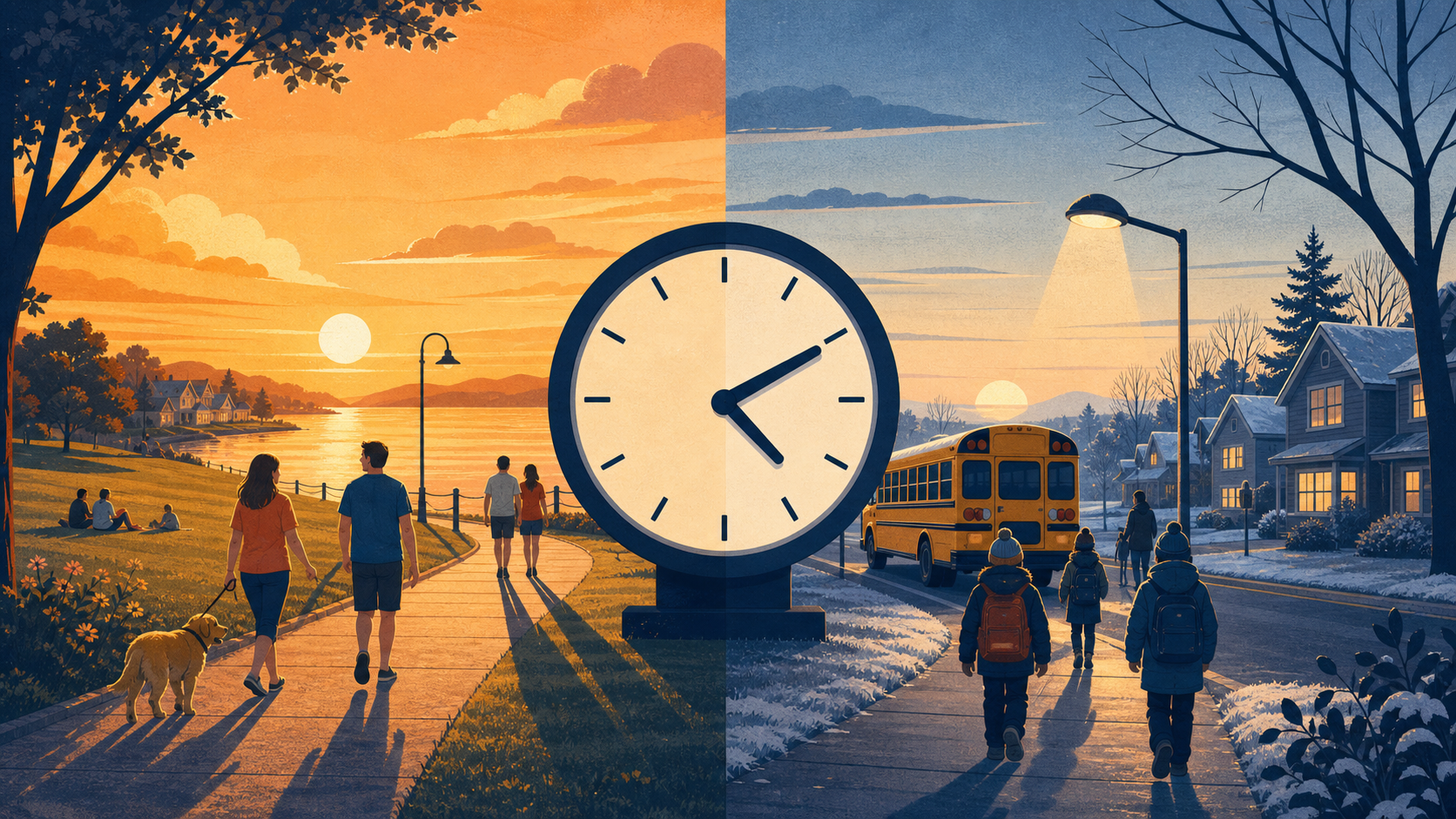
The fight over permanent daylight saving time shows how personal routines, vivid examples, and persuasive framing can make a complicated tradeoff feel obvious.
The U.S. House voted 308-117 to make daylight saving time permanent, reopening one of the country's most strangely passionate policy debates. Supporters picture brighter evenings, outdoor dinners, after-work errands, and an end to changing the clocks. Opponents picture winter mornings when children wait for buses and commuters drive before sunrise. The Senate would still need to act before the proposal could become law.
The online reaction has the familiar shape of an issue that feels simple because nearly everyone has personal experience with it. One side says, finally, no more clock changes. Another says permanent daylight saving time is exactly the wrong solution. Both reactions can contain valid concerns. The trap appears when one vivid part of the day becomes the entire argument.
The first trap is the availability heuristic. People naturally reach for the moments they can picture most easily. Someone who loves summer evenings may immediately imagine daylight after work. A parent with an early school schedule may imagine a child standing outside in winter darkness. The easier scene to recall can feel like the more important evidence, even though the policy affects seasons, latitudes, work schedules, sleep patterns, schools, and businesses differently.
The second trap is the framing effect. Calling the proposal a way to 'ditch the switch' frames it as freedom from an annoying ritual. Calling it 'permanent dark mornings' frames the same policy as a safety and sleep problem. Neither phrase is necessarily false, but each directs attention toward one benefit or one cost before the full comparison begins.
The third trap is the affect heuristic. Longer evening light can simply feel cheerful, social, and active. Dark winter mornings can feel bleak or unsafe. Those feelings are relevant because public policy affects daily life, but a strong feeling can quietly become a substitute for estimating consequences. A policy that feels better in July may not work the same way in January.
That distinction matters because ending the twice-yearly clock change and choosing which time to keep are separate decisions. The American Academy of Sleep Medicine supports ending seasonal changes but favors permanent standard time, arguing that morning light aligns more closely with human circadian biology. Many supporters of the House bill agree about ending the switch while preferring evening light instead. Agreement on the problem does not automatically settle the remedy.
The richer question is not whether evening light is good or dark mornings are bad. It is how the benefits and costs are distributed. Who gains useful daylight? Who loses morning light? How do the effects change by season, latitude, age, commute, and work schedule? A nationwide clock rule can produce very different lived experiences.
This is why the debate is a useful trap-spotting exercise. Personal experience should enter the discussion, but it should not impersonate the whole country. A slogan can summarize a preference, but it cannot perform the tradeoff analysis.
Before deciding that either permanent daylight saving time or permanent standard time is obviously correct, ask: am I judging the policy from the whole tradeoff, or from the part of the day I notice most?
Sources and Context
Check question: Am I judging the policy from the whole tradeoff, or from the part of the day I notice most?