A practical guide to cognitive biases

Thinking Traps

A practical guide for identifying the thinking patterns that distort reason, judgment, memory, belief, and decision-making.

Start with Memory Biases
9bias categories
232short bias entries
2reader aids per entry: example + check
1Start with today's trap.
2Match the pattern to a real-world example.
3Try the quiz to sharpen your pattern spotting.

AI Prompt Check

Spot the bias inside the question before AI answers it.

Prompts can carry hidden assumptions. Paste a prompt and Thinking Traps will flag likely bias patterns, then suggest a better way to ask.

What trap is this?

Paste a post and spot the likely thinking trap.

Use this for comments, replies, captions, and quick takes that feel distorted but are hard to name.

Today's Thinking Trap

Loading today's bias...

Explore by situation

Find the trap where it shows up.

Biases are easier to spot when they are connected to real life: work, relationships, politics, money, AI prompts, and online arguments.

No matching biases found. Try a broader search term.

How memory edits the past before we reason from it.

Memory Biases

Memory is not a recording. It is a reconstruction. These biases shape what we recall, what we forget, and how certain our memories feel.
01

Availability heuristic

Judging likelihood by how easily examples come to mind.

Example: After watching several stories about shark attacks, a beach trip suddenly feels much more dangerous.

Seen online as: I keep seeing stories about this, so it must be happening everywhere.

Check: Is this common, or just vivid and easy to remember?

Go Deeper
02

Availability cascade

A repeated claim starts to feel true because many people repeat it.

Example: A rumor about layoffs feels true after enough coworkers repeat it.

Seen online as: Everyone keeps repeating it, so there must be something to it.

Check: Can I trace this back to a solid original source?

Go Deeper
03

Recency bias

Overweighting the most recent event or information.

Example: A great final interview makes a hiring manager forget earlier concerns.

Seen online as: The latest example is the one that matters most.

Check: Am I judging the whole pattern or only the latest moment?

Go Deeper
04

Peak-end rule

Remembering an experience by its most intense moment and ending.

Example: A restaurant visit feels bad because dessert took forever, even though the meal was good.

Seen online as: The ending was awful, so the whole experience was awful.

Check: What happened across the full experience?

Go Deeper
05

Rosy retrospection

Remembering the past as better than it felt at the time.

Example: Someone misses an old apartment while forgetting the noisy neighbors.

Seen online as: Things were so much better back then.

Check: What evidence shows how I felt then?

Go Deeper
06

Hindsight bias

Seeing an outcome as more predictable after it happens.

Example: After a startup fails, everyone says the warning signs were obvious.

Seen online as: It was obvious from the beginning.

Check: What was actually knowable beforehand?

Go Deeper
Back to categories

How choices get pulled by framing, fear, habit, and first impressions.

Decision-Making Biases

Decision biases affect how we compare options, estimate risks, and justify commitments.
01

Anchoring bias

Relying too heavily on the first number, idea, or frame offered.

Example: A $120 shirt feels cheap after first seeing a $300 shirt.

Seen online as: The first price I saw made every other option feel expensive.

Check: What would I think if I started from a different anchor?

Go Deeper
02

Confirmation bias

Seeking or favoring information that supports what you already believe.

Example: Someone searches only for reviews that defend the phone they already want.

Seen online as: This proves what I have been saying all along.

Check: What evidence would change my mind?

Go Deeper
03

Framing effect

Reacting differently depending on how the same choice is presented.

Example: A treatment sounds better when described as 90% survival instead of 10% mortality.

Seen online as: The way this is worded already tells me who is wrong.

Check: How else could this exact option be framed?

Go Deeper
04

Loss aversion

Feeling losses more strongly than equivalent gains.

Example: A person avoids a fair risk because the possible loss feels larger than the possible gain.

Seen online as: I would rather avoid losing this than risk gaining something better.

Check: Am I avoiding a loss or choosing the best option?

Go Deeper
05

Status quo bias

Preferring things to stay as they are.

Example: An employee sticks with an old tool because changing workflows feels annoying.

Seen online as: Changing it sounds riskier than leaving it alone.

Check: Would I choose this if it were not already the default?

Go Deeper
06

Default effect

Sticking with the preselected option.

Example: A subscriber stays on the preselected plan without comparing alternatives.

Seen online as: I left it selected because it was already chosen.

Check: Who chose this default, and why?

Go Deeper
Back to categories

How identity, status, and belonging shape what we see in people.

Social Biases

Social biases affect how we explain behavior, judge groups, follow authority, and protect our self-image.
01

Fundamental attribution error

Overexplaining others' behavior by character and underexplaining situation.

Example: A late coworker is called irresponsible before anyone asks about traffic or childcare.

Seen online as: They messed up because they are careless.

Check: What situational pressure might explain this?

Go Deeper
02

Actor-observer bias

Explaining your actions by context and others' actions by personality.

Example: You were late because of traffic; they were late because they are careless.

Seen online as: The fast interpretation is doing more work than the evidence.

Check: Would I explain myself this harshly?

Go Deeper
03

Self-serving bias

Taking credit for success and blaming outside causes for failure.

Example: A student credits skill for a good grade and a bad teacher for a poor one.

Seen online as: The fast interpretation is doing more work than the evidence.

Check: What part did I actually play?

Go Deeper
04

In-group bias

Favoring people who feel like part of your group.

Example: A fan excuses their team's foul but condemns the same move by the rival team.

Seen online as: When our side does it, there is probably context.

Check: Would I judge this the same from an outsider?

Go Deeper
05

Out-group homogeneity bias

Seeing outsiders as more alike than they are.

Example: Someone says all members of another department think the same way.

Seen online as: They all think the same way.

Check: What differences inside that group am I missing?

Go Deeper
06

Halo effect

Letting one positive trait improve the whole judgment.

Example: A charismatic presenter is assumed to have a stronger plan.

Seen online as: They are impressive in one area, so I trust them everywhere.

Check: Which qualities have I actually observed?

Go Deeper
Back to categories

How the mind protects stories, explanations, and identity.

Belief and Reasoning Biases

Reasoning biases shape how we interpret evidence, defend beliefs, and decide what counts as proof.
01

Belief bias

Judging an argument by whether its conclusion seems believable.

Example: A weak argument feels strong because its conclusion sounds right.

Seen online as: The fast interpretation is doing more work than the evidence.

Check: Is the logic valid even if I dislike the conclusion?

Go Deeper
02

Belief perseverance

Holding a belief after its support has been weakened.

Example: A corrected rumor keeps shaping someone's opinion.

Seen online as: The fast interpretation is doing more work than the evidence.

Check: What evidence originally convinced me?

Go Deeper
03

Confirmation bias

Favoring evidence that supports existing beliefs.

Example: Someone searches only for reviews that defend the phone they already want.

Seen online as: This proves what I have been saying all along.

Check: What is the best opposing evidence?

Go Deeper
04

Disconfirmation bias

Scrutinizing opposing evidence more harshly than supporting evidence.

Example: A person fact-checks opposing articles intensely but skims friendly ones.

Seen online as: This proves what I have been saying all along.

Check: Am I using the same standard both ways?

Go Deeper
05

Motivated reasoning

Reasoning toward the answer you want to be true.

Example: A fan explains away every bad call against their favorite team.

Seen online as: I am not defending my side; I am just following the facts.

Check: What outcome am I hoping for?

Go Deeper
06

Backfire effect

Sometimes correcting a belief can make it feel more entrenched.

Example: A correction makes someone defend the original claim even harder.

Seen online as: That correction makes me trust my original view even more.

Check: Am I defending identity instead of evaluating evidence?

Go Deeper
Back to categories

How the present moment narrows what gets noticed.

Attention and Perception Biases

Attention is selective. These biases influence what becomes visible, what disappears, and what feels important.
01

Attentional bias

Paying more attention to emotionally relevant or threatening cues.

Example: An anxious person notices every possible sign of disapproval.

Seen online as: Once I started worrying about it, I saw signs everywhere.

Check: What else is present that I am not noticing?

Go Deeper
02

Inattentional blindness

Missing obvious things while focused on another task.

Example: Someone misses a friend waving while focused on finding a street sign.

Seen online as: What stands out is starting to feel like the whole story.

Check: What might be outside my focus?

Go Deeper
03

Change blindness

Missing changes in a scene or situation.

Example: A viewer does not notice when an object disappears between camera cuts.

Seen online as: The fast interpretation is doing more work than the evidence.

Check: What changed while I was not looking?

Go Deeper
04

Frequency illusion

Noticing something everywhere after recently learning about it.

Example: After learning a new word, someone suddenly sees it everywhere.

Seen online as: It feels familiar, so I assume I have learned it.

Check: Is it more common, or am I newly tuned to it?

Go Deeper
05

Salience bias

Overweighting what is prominent or attention-grabbing.

Example: A dramatic anecdote gets more attention than a quiet trend.

Seen online as: The loudest detail must be the most important one.

Check: Is this important or just noticeable?

Go Deeper
06

Neglect of probability

Ignoring actual odds when emotions are strong.

Example: A rare danger feels likely because it is frightening.

Seen online as: The chart looks convincing before I check the sample.

Check: What are the real chances?

Go Deeper
Back to categories

How money, ownership, price, and effort distort value.

Economic and Consumer Biases

Consumer biases influence how we value things, justify purchases, and react to scarcity or cost.
01

Mental accounting

Treating money differently depending on its category.

Example: A tax refund feels like bonus money even though it is still income.

Seen online as: The deal is making the decision feel smarter than it is.

Check: Would I spend this the same way from another account?

Go Deeper
02

Money illusion

Focusing on nominal dollars instead of real purchasing power.

Example: A raise feels bigger until rent and prices rise too.

Seen online as: The deal is making the decision feel smarter than it is.

Check: What is this worth after inflation or context?

Go Deeper
03

IKEA effect

Overvaluing something because you helped make it.

Example: A wobbly shelf feels special because you assembled it yourself.

Seen online as: The fast interpretation is doing more work than the evidence.

Check: Would someone else value it the same way?

Go Deeper
04

Ownership effect

Valuing what you own more than equivalent alternatives.

Example: A person values their concert ticket more once it is in their hand.

Seen online as: The deal is making the decision feel smarter than it is.

Check: Would I buy it again today?

Go Deeper
05

Scarcity bias

Wanting something more because it seems limited.

Example: A countdown timer makes an ordinary deal feel urgent.

Seen online as: Only two left, so I should probably grab it now.

Check: Do I want it, or do I fear missing out?

Go Deeper
06

Commitment bias

Sticking with a prior position to appear consistent.

Example: Someone keeps defending a public opinion after privately doubting it.

Seen online as: The easiest option is starting to feel like the best one.

Check: What would I choose without the earlier commitment?

Go Deeper
Back to categories

How numbers mislead when samples, comparisons, or methods are flawed.

Probability and Statistical Biases

Statistical biases distort how we read evidence, samples, studies, and patterns in data.
01

Base rate fallacy

Ignoring general probabilities when judging a specific case.

Example: A vivid description makes a rare diagnosis feel more likely than it is.

Seen online as: The chart looks convincing before I check the sample.

Check: What usually happens in this category?

Go Deeper
02

Selection bias

Drawing conclusions from a non-representative sample.

Example: A gym survey misses people who quit because only current members answer.

Seen online as: The chart looks convincing before I check the sample.

Check: Who was included or excluded?

Go Deeper
03

Survivorship bias

Studying only those who made it through a process.

Example: Entrepreneur advice comes only from founders whose companies survived.

Seen online as: They succeeded this way, so this must be the path.

Check: Who disappeared before the measurement?

Go Deeper
04

Publication bias

Published evidence overrepresents notable or positive findings.

Example: Successful studies are easier to find than failed ones.

Seen online as: The fast interpretation is doing more work than the evidence.

Check: What studies were not published?

Go Deeper
05

Reporting bias

Only some outcomes or facts are reported.

Example: A company highlights favorable survey results and leaves out weak ones.

Seen online as: The fast interpretation is doing more work than the evidence.

Check: What is missing from the report?

Go Deeper
06

Sampling bias

The sample differs systematically from the population.

Example: A poll of morning commuters misses people who work nights.

Seen online as: Everyone I asked agrees with me.

Check: Does this sample match the group being discussed?

Go Deeper
Back to categories

How confidence, fluency, and expertise can distort learning.

Learning and Performance Biases

Learning biases affect how we judge understanding, practice skills, and solve problems.
01

Curse of knowledge

Forgetting what it is like not to know something.

Example: An expert explains a topic using terms beginners have never heard.

Seen online as: The fast interpretation is doing more work than the evidence.

Check: How would this sound to a beginner?

Go Deeper
02

Illusion of explanatory depth

Thinking you understand something until asked to explain it.

Example: Someone feels they understand a zipper until asked to explain how it works.

Seen online as: The fast interpretation is doing more work than the evidence.

Check: Can I explain the mechanism step by step?

Go Deeper
03

Illusion of competence

Feeling skilled because material feels familiar.

Example: A student recognizes highlighted notes and thinks they can recall them.

Seen online as: I reread it, so I probably know it.

Check: Can I perform without prompts?

Go Deeper
04

Fluency illusion

Mistaking easy processing for real mastery.

Example: A video lesson feels easy, so the viewer assumes they mastered the skill.

Seen online as: The explanation was smooth, so I must understand it.

Check: Can I recall it later under pressure?

Go Deeper
05

Overlearning bias

Continuing easy practice past usefulness while neglecting harder gaps.

Example: A musician keeps practicing the easy section and avoids the hard measure.

Seen online as: I remember it clearly, so I trust that version.

Check: Am I practicing what already feels comfortable?

Go Deeper
06

Einstellung effect

Using a familiar solution even when a better one exists.

Example: A familiar spreadsheet trick blocks someone from seeing a simpler solution.

Seen online as: The fast interpretation is doing more work than the evidence.

Check: What other approach might work?

Go Deeper
Back to categories

How values, identity, and institutions shape judgment.

Moral, Political, and Workplace Biases

These biases affect ethical judgment, conflict, hiring, evaluation, politics, and organizational life.
01

Moral luck bias

Judging morality by outcomes partly shaped by luck.

Example: A drunk driver who gets home safely is judged less harshly than one who causes harm.

Seen online as: I am judging the person before I understand the situation.

Check: Would I judge the act the same if luck changed?

Go Deeper
02

Moral licensing

Using past good behavior to excuse later poor behavior.

Example: A person donates to charity and then excuses rude behavior.

Seen online as: I already did the good thing, so this small exception is fine.

Check: Am I using virtue as permission?

Go Deeper
03

Moral outrage bias

Letting outrage become its own reward.

Example: Sharing anger online starts to feel like meaningful action.

Seen online as: Being angry feels like doing something.

Check: Is outrage helping or replacing action?

Go Deeper
04

Purity bias

Judging by feelings of contamination or disgust.

Example: A policy feels wrong because it triggers disgust, not because harm is clear.

Seen online as: The fast interpretation is doing more work than the evidence.

Check: Is disgust acting as evidence?

Go Deeper
05

Partisan bias

Evaluating facts differently by political side.

Example: The same economic report is praised or dismissed depending on which party is in office.

Seen online as: It is different when our side does it.

Check: Would I accept this from my side's opponent?

Go Deeper
06

Ideological bias

Filtering evidence through a worldview.

Example: Evidence is accepted only when it fits a broader worldview.

Seen online as: The fast interpretation is doing more work than the evidence.

Check: What would challenge my ideology?

Go Deeper
Back to categories

Practice mode

Thinking Traps Quiz

Ten quick scenarios. Pick the bias that is most likely happening before the timer runs out.

Question 0 of 10 20s

Start the quiz when you are ready.

You will get quick feedback after each answer.

Dialogue mode

Clarity Quest

Practice spotting thinking traps inside conversations. Choose the response that keeps trust intact while moving the character toward a clearer question.

16-bit quest setup

Choose Your Run

Player
Map
Fish 0/3
Pattern Road
CQ
WASD to move
Physical
0%
Mental
0%
Scene 0 of 5 Find the pattern

Press Start Quest to begin a short dialogue challenge.

Blog

Thinking Traps in real life.

Short posts that turn cognitive biases into practical check questions for online arguments, AI prompts, money, work, relationships, and daily decisions.

View Blog

Thinking Traps Basics

What Is a Thinking Trap?

A thinking trap is a pattern that makes a judgment feel clearer, fairer, or more certain than it really is.

Support the project

Thinking Traps Goods

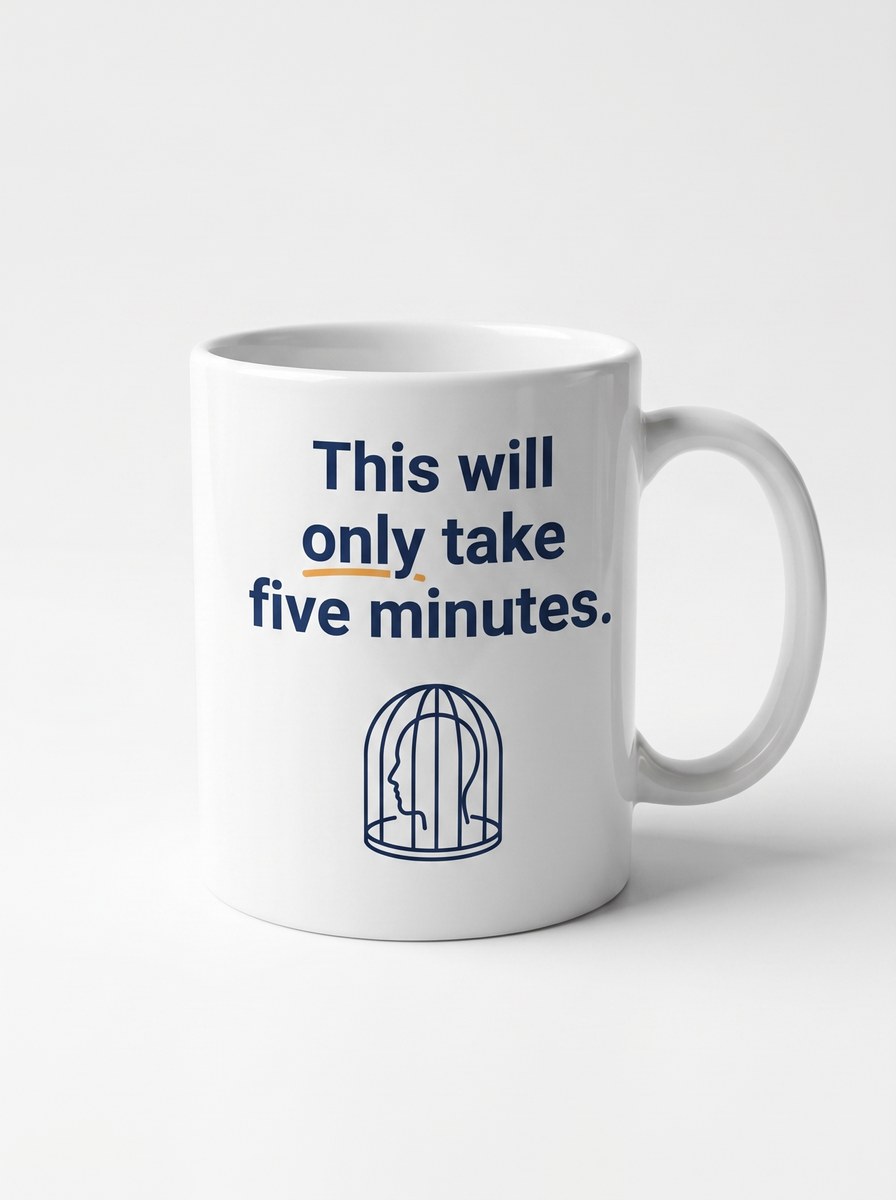
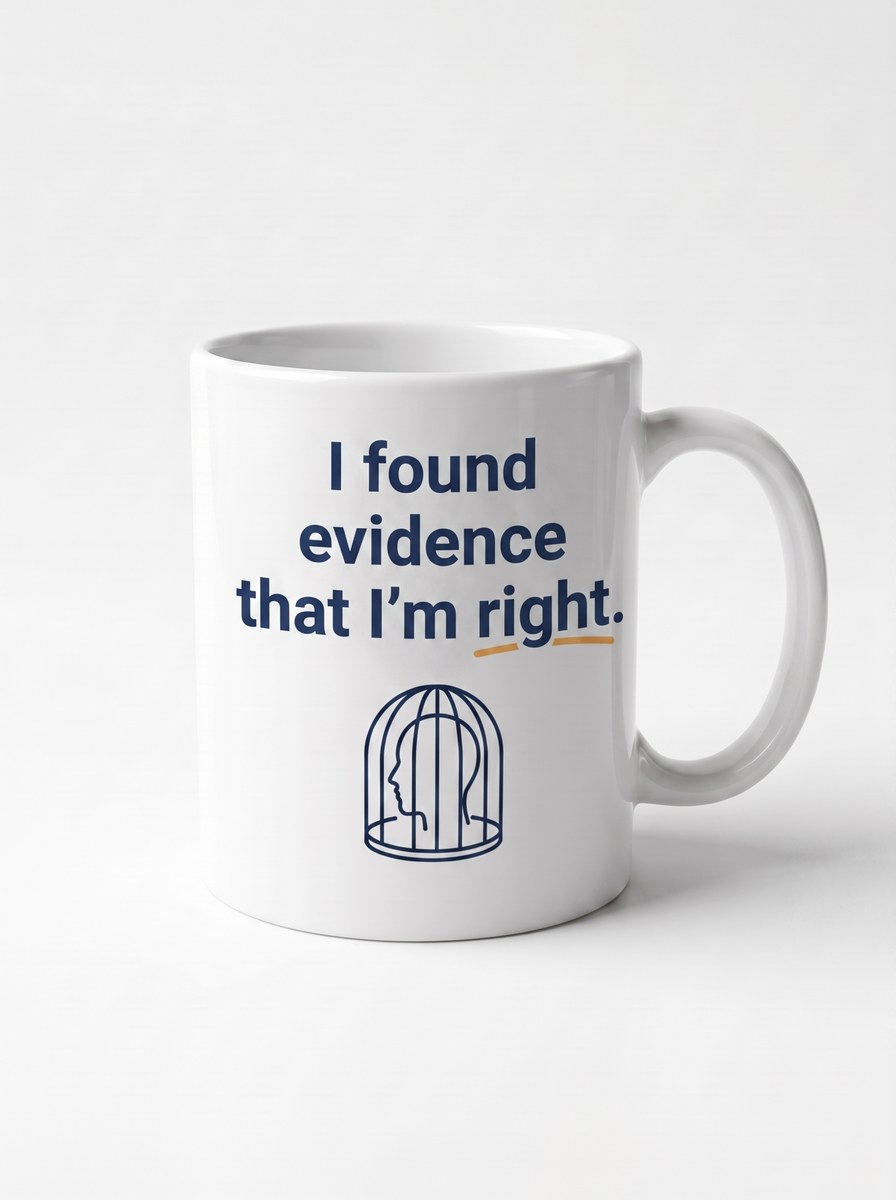
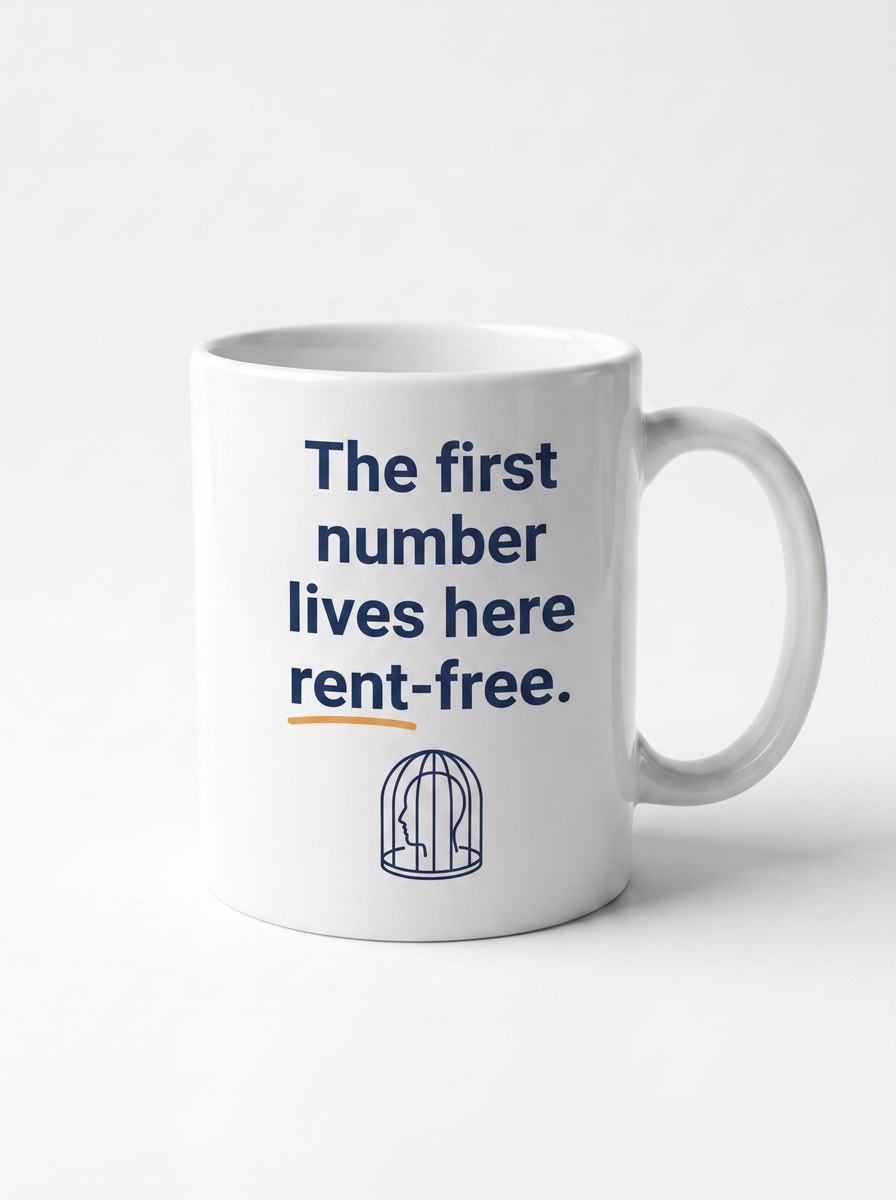
Everyday reminders for clearer thinking: simple mugs, desk cards, and conversation pieces built around the traps people actually notice in real life.

Get Drop Updates

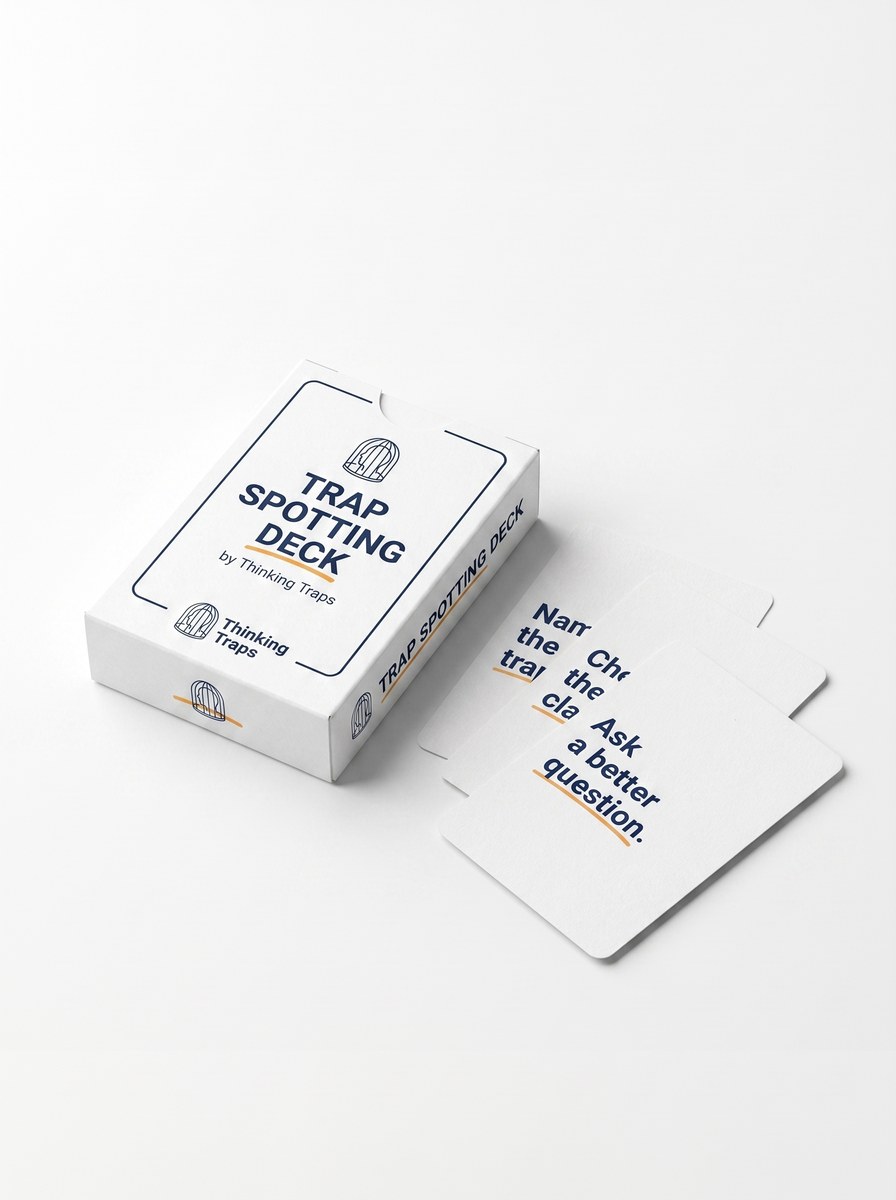
Trap Spotting Deck

A pocket set for naming the trap, checking the claim, and asking a better question.

Coming Soon

Quick FAQ

How to Use Thinking Traps

What is a cognitive bias?

A cognitive bias is a predictable thinking shortcut that can shape memory, judgment, decisions, or interpretation before we notice it.

What is a thinking trap?

A thinking trap is a practical name for a mental pattern that makes a quick judgment feel more certain, fair, or complete than it really is.

How do I use Thinking Traps?

Start with the daily trap, search for a situation, open Go Deeper on a bias, then ask the check question before acting on your first impression.

What is the difference between a bias and a fallacy?

A bias is a tendency in how we notice, remember, or judge information. A fallacy is usually a flaw in reasoning or argument structure. They often overlap in real life.

Quick Decision Checklist

When a decision feels obvious, slow down just enough to ask:

  • What would change my mind?
  • What information is missing?
  • What would I think if the order, source, or framing changed?
  • Am I reacting to vividness, familiarity, identity, or evidence?
  • What would a calmer, future, or outside observer notice?
  • Can I explain the opposite view fairly?
  • What does the base rate or longer pattern show?