
Virality, Identity, and Meme Markets
Jimothy Is Not a Meme Coin
How a free-roaming Seattle raccoon became a character, a community, and a multimillion-dollar story - and what our affection can hide about speculative value.
Jimothy did not launch a brand. He did not hire a social media manager, pose for promotional photographs, release a roadmap, or ask anyone to turn him into a cryptocurrency. He ran through a Seattle yard. That was enough.
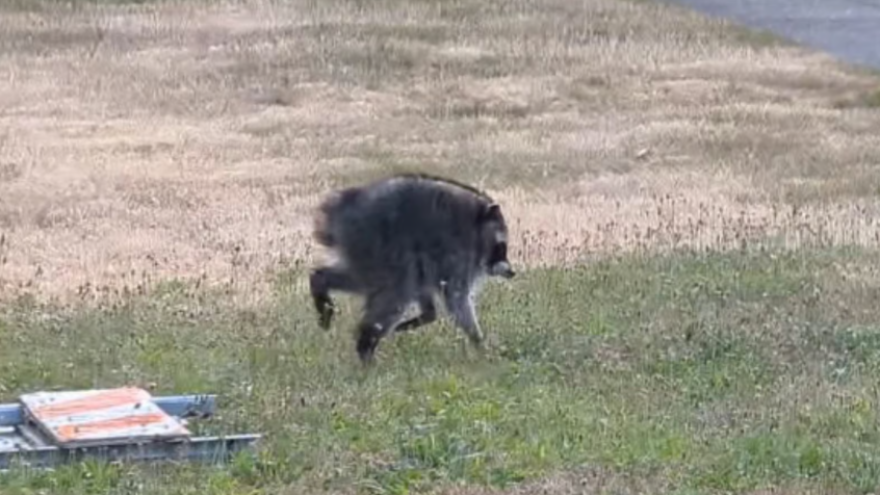
A brief video posted from Seattle's Ballard neighborhood showed an unusually round raccoon moving across the grass and climbing a set of steps. The person filming asked the question that millions of people would soon repeat: 'What am I looking at?'
The answer was apparently a wild raccoon with a congenital spinal condition. But the internet supplied a better answer.
That is Jimothy.
Within days, the raccoon had acquired titles, lore, fan art, murals, merchandise, tattoos, a video game, a Seattle Mariners appearance, and a dedicated online community. A painting inspired by him reportedly sold for more than $6,500 to benefit the Ballard Food Bank. A Seattle councilmember even announced plans for a 'Jimothy Summer' proclamation.
Then came the token.
$JIMOTHY, a Solana memecoin using the raccoon's name and image, climbed to the first position displayed on Phantom's trending-token list. At one snapshot on July 21, CoinGecko reported a market capitalization near $19 million and roughly $24 million in trading volume over 24 hours. Those figures can change dramatically by the time this sentence is read.
How does a wild animal become a multimillion-dollar narrative in less than a week?
The answer is not that people suddenly performed a careful valuation of raccoon-related assets.
The answer is that Jimothy is nearly perfect for the human mind.
The Difference We Cannot Ignore
Jimothy is distinctive.
His likely spinal condition gives him a compact body, high shoulders, long-looking legs, and a silhouette that is instantly recognizable. Wildlife experts have not publicly examined him, so his precise diagnosis should not be treated as certain. But his appearance is clearly different from that of an ordinary raccoon.
That difference activates what psychologists call the isolation effect, sometimes known as the Von Restorff effect: when one item noticeably differs from everything around it, we are more likely to notice and remember it.
The internet contains an almost limitless supply of animal videos. A normal raccoon crossing a lawn might earn a glance. Jimothy creates a question.
What is that?
Questions hold attention longer than answers. Before viewers know his name, they are already inspecting him. Once the unusual shape receives an unusual name, the image becomes difficult to forget.
This is the first Thinking Trap in the story: we often confuse memorability with importance.
Jimothy's distinctiveness made him memorable. The internet then made him meaningful.
The Internet Did Not Discover a Character. It Created One.
Jimothy is a real raccoon. 'Jimothy' is a collaborative work of fiction built around him.
We do not know his aspirations. We do not know whether he is brave, carefree, rebellious, ambitious, or indifferent to public opinion. We know that he searches for food, moves around Ballard, and appears to be surviving in the wild.
But human beings are relentless storytellers.
We see an animal moving through the city despite a visible physical difference, and we construct a personality: determined, independent, unbothered. We call him a king, a saint, a sweet prince, and an icon. His name sounds strangely formal for a raccoon, which makes every ordinary raccoon behavior feel like part of a larger character.
This is anthropomorphism combined with narrative bias.
Anthropomorphism gives Jimothy human motives and qualities. Narrative bias arranges unrelated events into a satisfying story. He is no longer simply looking for food. He is patrolling his city. He is not merely surviving. He is refusing to be defined by his condition.
None of this is literally knowable.
But it can still be emotionally meaningful.
The Thinking Trap is not finding inspiration in Jimothy. It is forgetting which parts of the story came from the animal and which parts came from us.
The Free Agent Difference
The internet has fallen in love with unusual animals before.
Moo Deng became famous as a baby pygmy hippopotamus at Thailand's Khao Kheow Open Zoo. Her handlers documented her biting, bouncing, eating, and reacting to water. Her celebrity increased zoo attendance, inspired merchandise, and eventually produced a Solana memecoin that reached hundreds of millions of dollars in reported market value.
Pesto, the enormous king penguin chick at SEA LIFE Melbourne Aquarium, became famous during the same period. Aquarium staff could provide regular footage, explain his development, organize a gender reveal, introduce celebrity visitors, and place his size in context.
Moo Deng and Pesto were authentic animals, but their public stories had institutional narrators. There were enclosures, caretakers, official accounts, scheduled appearances, and reliable opportunities to create new content.
Jimothy has none of that.
He is a free agent.
There is no guaranteed Jimothy content tomorrow. No organization can schedule his next appearance. Residents encounter him unexpectedly through backyard cameras, nighttime walks, and old videos rediscovered on phones. His story is assembled from sightings rather than issued from an official account.
That changes the emotional texture of the phenomenon.
Jimothy feels less like a celebrity being presented to us and more like a secret the city discovered together. Every sighting is scarce. Every clip feels unscripted. Every resident with an old recording might possess a missing piece of the legend.
This distributed authorship makes Jimothy feel as if he belongs to everyone precisely because he belongs to no one.
It also introduces scarcity bias. We value access more when it is unpredictable. A new photograph of an animal with a daily livestream is content. A new Jimothy sighting feels like an event.
When Affection Becomes a Market Signal
The wholesome Jimothy phenomenon and the $JIMOTHY token are connected, but they are not the same thing.
Buying the token does not buy part of Jimothy. It does not represent ownership in his story, and there is no inherent reason its price must reflect his health, popularity, cultural significance, or the good work inspired by his fame. The token's own website acknowledges that it has no intrinsic value or expectation of financial return.
What it does offer is participation.
A buyer can feel that they are not merely watching the Jimothy moment but joining it. The ticker becomes a badge, an inside joke, a community membership, and a bet on how many more people will discover the same story.
This is where the affect heuristic becomes financially important.
The affect heuristic occurs when our feelings about one thing influence our judgment of another. Jimothy makes people feel amused, protective, hopeful, or connected. Those emotions can quietly transfer to an asset carrying his name.
I like Jimothy.
Therefore, I like the Jimothy token.
I believe Jimothy's story will keep spreading.
Therefore, I believe the token's price will keep rising.
Those conclusions feel connected because they share a name and image. Logically, they remain separate.
Jimothy can continue being wonderful while the token collapses. The token can rise while doing nothing for Jimothy. A community can be sincere even when a trade is reckless.
Warm feelings are real. They are not financial analysis.
The Number-One Trap
When a token appears at the top of a trending list, the ranking does more than report attention. It creates more attention.
This is social proof: when we are uncertain, we look at what other people are doing for evidence of what deserves our interest.
A person opens Phantom and sees Jimothy first. That placement suggests that thousands of others have already noticed something important. The viewer investigates. Some buy. Their activity helps preserve the trend, exposing the token to another wave of people.
The ranking becomes self-reinforcing.
Then FOMO adds urgency. A viral animal has a short cultural window. A rapidly moving token creates the impression that hesitation is expensive. Together they produce a powerful thought: everyone loves Jimothy, everyone is seeing this token, and this may be my last chance to get in early.
But popularity can explain why a price is moving without telling us whether the price is justified or sustainable.
Trending is a measurement of motion, not a certificate of value.
What Jimothy Has Actually Achieved
Strictly speaking, Jimothy has not achieved a market capitalization, launched a game, raised money, or united Seattle. People did those things around him.
But that does not make the outcome meaningless.
A visibly different wild animal appeared for a few seconds, and people responded by making art, sharing laughter, raising money, telling stories, and finding a small point of connection. In a fragmented online culture, that is not nothing.
The healthiest version of Jimothy's inspirational story is not that he 'overcame' a condition. We do not know his experience, and he does not owe us a lesson about adversity.
It is simpler than that.
Jimothy is moving through the world in the body he has. He is not polished, optimized, managed, or made conventionally cute. His difference is the first thing people notice, but it did not prevent them from seeing him with affection.
Perhaps that is why the story feels wholesome.
The internet often treats difference as a defect to correct or a spectacle to mock. With Jimothy, millions of people looked at something unusual and decided to protect it, celebrate it, and give it a wonderfully inappropriate human name.
That response says more about us than it does about him.
So does the memecoin.
One side of the phenomenon reveals our capacity to build community around delight. The other reveals how quickly delight can become demand, demand can become a chart, and a chart can begin directing the story.
Jimothy remains a raccoon either way.
The most useful question is whether we can enjoy the symbol without confusing it for the asset, and admire the character without forgetting the living animal underneath it.
If the token had the same price chart but no connection to Jimothy, would it still feel equally valuable?
Sources and Context
- KUOW: Why Jimothy is taking Seattle and the internet by storm
- Axios Seattle: Jimothy inspires a mural, video game, Mariners appearance, and more
- ABC News Australia: Jimothy's likely spinal condition and viral rise
- Phantom: Trending tokens
- CoinGecko: Jimothy The Raccoon market data
- The Guardian: How Moo Deng became a global online celebrity
- Associated Press: Pesto the penguin's extraordinary global audience
Check question: If the token had the same price chart but no connection to Jimothy, would it still feel equally valuable?