
AI, Art, and Perception
The Monet AI Experiment: When a Label Changes What You See
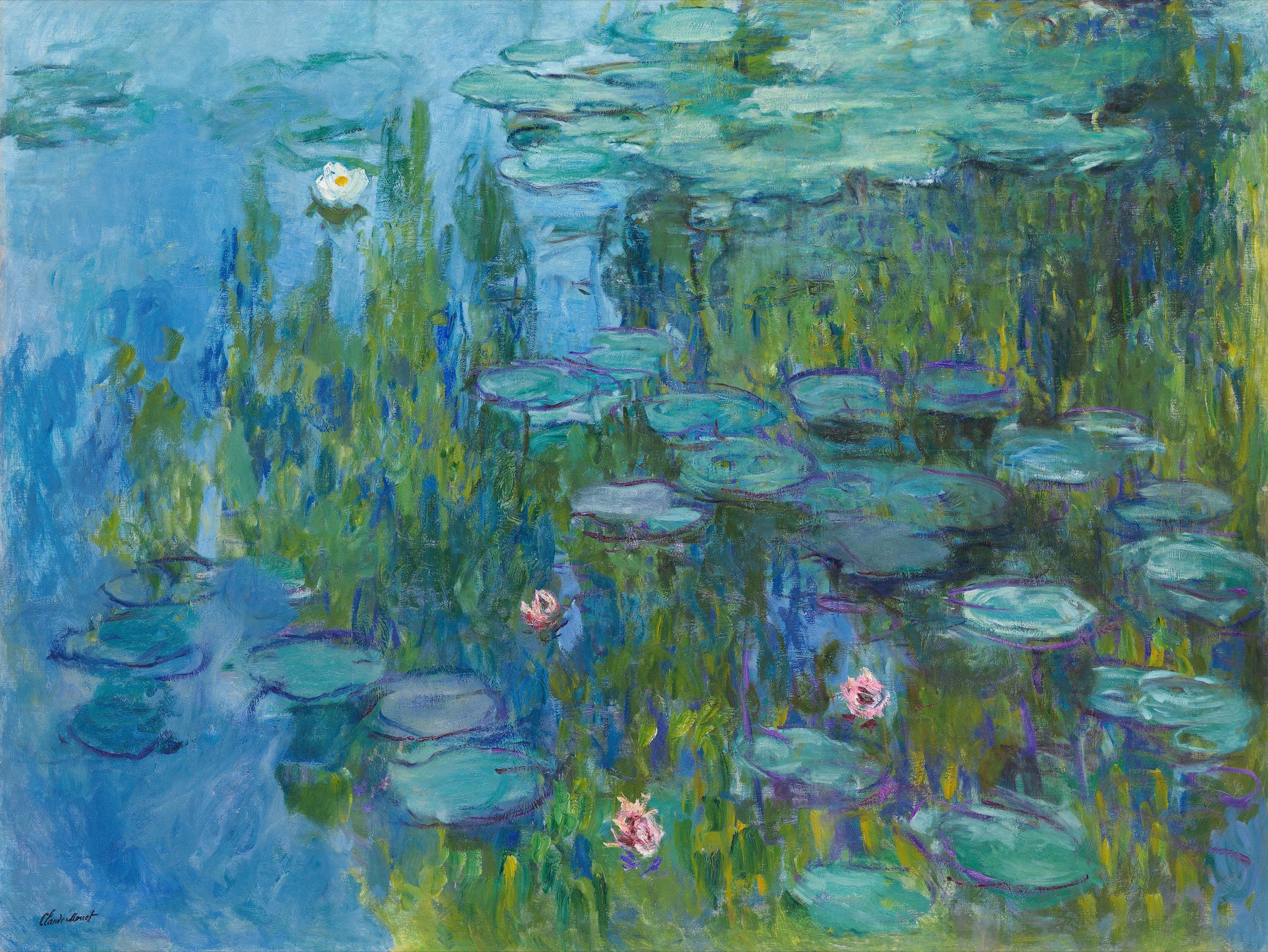
SHL0MS labeled a real Claude Monet painting as AI-generated, and the internet supplied the flaws. The experiment reveals how framing, confirmation bias, and the horn effect can change what we think we see.
On May 12, conceptual artist SHL0MS posted a cropped image of blue-green water, lily pads, and loose brushwork on X. The caption said it had been generated by AI in the style of Claude Monet and asked people to explain, in as much detail as possible, what made it inferior to a real Monet. X's Made with AI label reinforced the premise.
The invitation worked. Replies identified supposedly incoherent composition, unnatural reflections, weak depth, missing texture, muddled color, and a lack of soul. Some critiques ran for hundreds of words. The post reached millions of views, and more than 600 responses accumulated around a shared assumption: the image was synthetic, and the task was to locate the evidence of its inferiority.
Then came the reveal. The image was a slightly cropped scan of Monet's Water Lilies, painted around 1915 and held by the Neue Pinakothek in Munich. SHL0MS had removed the signature and chosen a genuine Monet that felt familiar without being instantly recognizable. Not everyone was fooled; some painters and art historians challenged the premise or identified the work. But many people did something more interesting than simply guess wrong. They saw real features and changed what those features meant.
What the Experiment Shows - and What It Does Not
This was a viral performance, not a controlled psychology study. The replies were self-selected. Confident mistakes were more shareable than cautious observations. Some participants may have been joking, performing for an audience, or reacting to the prompt rather than offering a sincere aesthetic judgment. Deleted posts and curated screenshots make it impossible to treat the thread as a representative survey of artists, critics, or the public.
It also does not prove that AI-generated art is equal to Monet, that authorship never matters, or that every objection to generative AI is hypocrisy. What it demonstrates cleanly is narrower: once people accepted a loaded label and conclusion, many could construct detailed visual evidence for a judgment the image itself did not justify. Experimental research finds a similar labeling effect under more controlled conditions. Identical or comparable works often receive lower aesthetic ratings when presented as AI-generated rather than human-made.
Trap One: The Framing Effect
The framing effect changes a judgment when the same thing is presented through a different description. SHL0MS did not ask, 'What do you notice in this painting?' The prompt asked what made the image inferior. That wording quietly supplied both the category and the verdict. The viewer's role was reduced to finding reasons.
In SHL0MS's later account, one commenter pointed to a bright purple outline around the lilies as evidence of AI failure. The outline was genuinely there. Under the AI frame, it became a garish mistake. Under the Monet frame, the same pigment could become expressive color, late-style experimentation, or intentional tension. Perception had not completely failed; attribution had changed the meaning of what was perceived.
This is why labels are not merely neutral facts placed beside an experience. 'Original Monet,' 'student painting,' 'AI-generated image,' and 'museum masterpiece' each activate a different set of expectations before the eye has finished looking. The work stays still while the standard moves around it.
Trap Two: Confirmation Bias
Confirmation bias favors evidence that supports what we already believe. Once the post established that the image was AI-generated and inferior, every irregular brushstroke became a possible tell. Ambiguous details were recruited as proof, while details inconsistent with the premise received less attention.
The request for a detailed explanation made the trap stronger. It rewarded fluency, specificity, and confidence rather than verification. A person could sound increasingly knowledgeable while moving farther from the truth because each sentence was built on the same unchecked premise. Reverse-image search, source skepticism, or a simple 'Is it actually AI?' would have interrupted the performance. But those moves did not answer the question the crowd had been invited to answer.
This pattern reaches far beyond art. Give someone a political clip labeled propaganda, a resume labeled AI-written, or a song labeled synthetic, and the mind begins searching for category-consistent defects. The explanation often arrives after the judgment, even though it feels like the explanation produced the judgment.
Trap Three: The Horn Effect
The horn effect lets one negative trait spoil the whole evaluation. For many viewers, the AI label did not describe one part of the production process; it contaminated the entire object. Composition, emotion, effort, originality, and worth all fell together.
The reverse is also visible. Once the reveal attached Monet's name, the halo of a canonical artist made the same features easier to defend. The experiment therefore exposed two labels working in opposite directions: AI as permission to dismiss and Monet as permission to admire. Neither label required viewers to spend more time with the image.
Effort is part of this reaction. People often value creative work more when they believe it required time, skill, sacrifice, or intention. Generative AI can signal low effort, mass production, and replaceability, even when the actual workflow is unknown. Those concerns may be relevant to value. The trap is allowing an assumption about effort to masquerade as a direct observation about color, composition, or sound.
When Knowing the Maker Really Does Matter
There is a tempting but incomplete lesson here: if people cannot tell the difference, the difference does not matter. That collapses several kinds of judgment into one. Aesthetic experience asks what the work looks or sounds like. Provenance asks who made it and how. Ethical judgment asks about consent, training data, compensation, deception, and displacement. Cultural value asks what history, intention, and human relationship the work carries. These questions interact, but they are not identical.
A listener might enjoy a song and then feel differently after learning that its voice was cloned without permission. Nothing in the waveform changed, but ethically relevant information did. Someone else may simply decide that human performance is part of what they value in music, just as provenance matters when buying an antique. That is a preference about the whole experience, not necessarily a hallucination about the notes.
The thinking trap appears when the label rewrites the sensory record. If a song was moving until the AI disclosure, it is fair to reconsider what the song means to you. It is less fair to insist that the melody has suddenly become obviously lifeless or the mix technically poor when those defects were inaudible moments earlier.
Research on music makes the distinction useful. A 2026 study found that labeling music as AI-composed reduced listeners' narrative engagement: people found it harder to imagine a mind or story behind the piece. Yet a 2025 pop-music experiment found no broad penalty in liking or perceived quality and even found more positive emotional ratings for some AI-labeled tracks. The response is not universal. Labels can change meaning-making without reliably changing what reaches the ear.
A Better Test: Experience First, Context Second
When possible, make two passes. On the first pass, describe the experience without guessing the source: What do I see or hear? Which choices work? Which do not? What emotion or idea reaches me? Use concrete language that would remain true if the authorship label were reversed.
On the second pass, add provenance. Who made it? What tools were used? Was the process disclosed? Were people imitated, licensed, paid, or displaced? Does intention matter to this kind of work? This information can legitimately change whether you support, buy, recommend, or emotionally connect with the piece. Keeping the passes separate makes it easier to know what actually changed.
This is not an argument for hiding AI use. Transparency helps people make informed ethical and cultural choices. Blind evaluation is a diagnostic exercise, not a rule for platforms. The goal is to prevent a label from doing all the seeing before our eyes or ears have had a chance.
The Painting Did Not Change
The SHL0MS experiment did not settle whether AI can make great art. It revealed how eagerly people can turn a category into a verdict and then turn the verdict into visual evidence. The critics were not always wrong about what was on the canvas. They were often wrong about why it was there and what it meant.
That is the strange power of the episode. Before the reveal, the painting was treated as proof that AI lacks the qualities of Monet. After the reveal, it became proof that people cannot reliably see those qualities when a hostile label gets there first. The pixels never moved. The story around them did all the work.
The next time a creative work becomes worthless the moment its origin is disclosed, ask: what changed in the work itself - and what changed only in the story I was told about it?
Sources and Context
Check question: What changed in the work itself - and what changed only in the story I was told about it?