
Sports and Online Reactions
When a World Cup Loss Feels Rigged
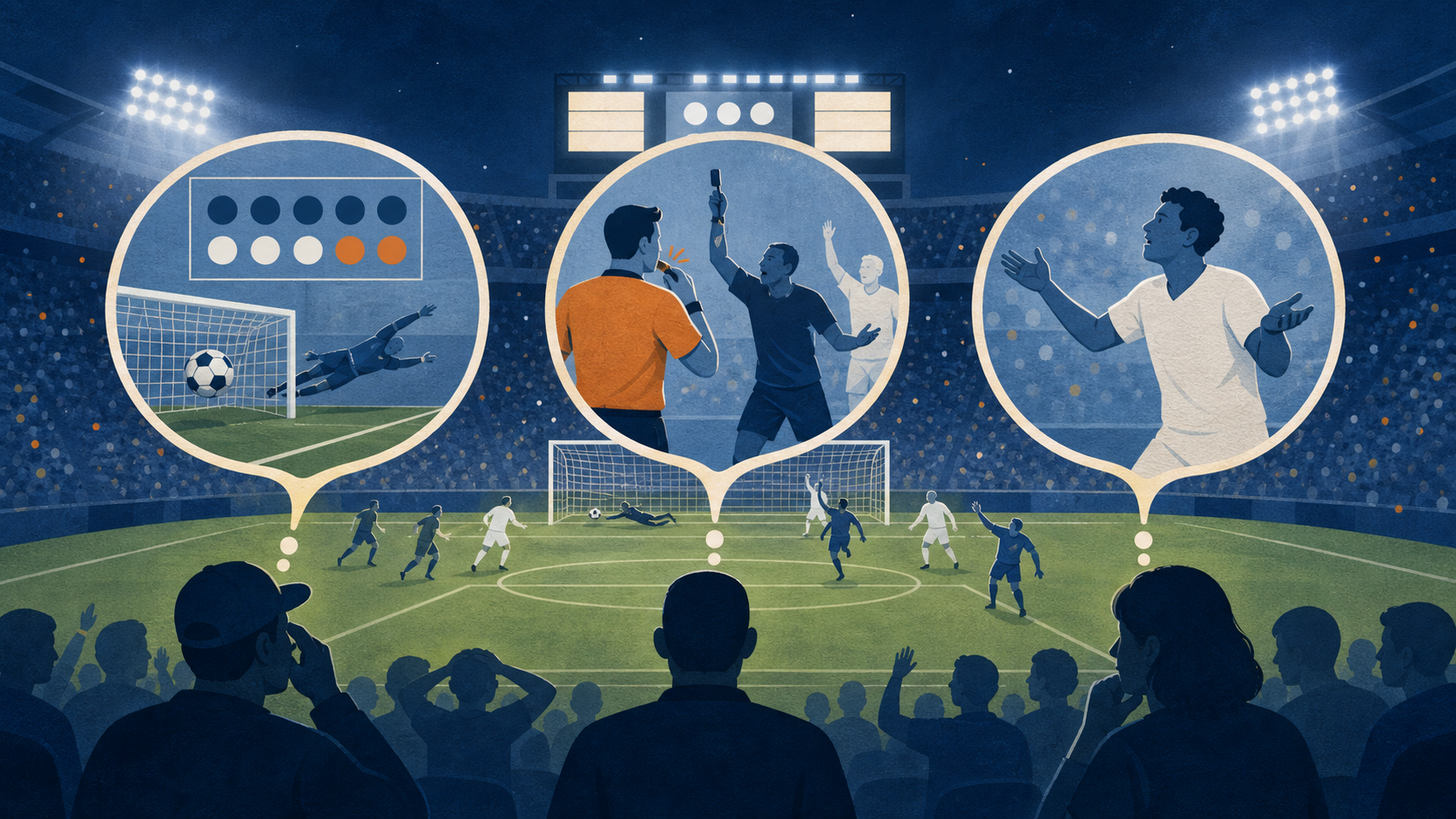
Argentina's late World Cup win over England shows how a painful result can turn a refereeing debate, a coaching choice, and a social-media feed into a story of certainty.
Argentina's 2-1 comeback over England in the World Cup semifinal set off exactly the kind of online reaction a huge match produces: celebration, heartbreak, tactical arguments, clips of key calls, old rivalry memories, and a fast-moving claim that somebody must have caused the result. Argentina will now face Spain in Sunday's final, but much of the conversation has already moved beyond what happened on the field into what people think the result proves.
That is not because fans are irrational for caring. A semifinal is built to make moments matter. The trap begins when an emotional result compresses a complicated match into a clean moral story: the winners were destined, the losers choked, the manager threw it away, the referee was against us, or the whole thing was rigged.
The first trap is outcome bias. A choice can be sensible before the whistle and still lead to a bad result. After a late collapse, every substitution, defensive choice, and missed chance suddenly looks obviously foolish. But a final score cannot tell us by itself whether a decision was sound when it was made. Good processes can lose; poor processes can get lucky.
The second trap is hostile attribution bias. In a tense match, an unclear call can feel like evidence that someone intended harm. On social media, a disputed decision can quickly become proof that officials favor a star, a country, or a tournament storyline. Some calls deserve real scrutiny. The check is whether the evidence points to a mistake, a pattern, or an intention. Those are three different claims, and online feeds often skip straight to the third.
The third trap is fundamental attribution error. When a team loses, we can explain it through a person's character: the coach is cowardly, the player disappeared, the team lacks heart. When our own side wins, we may describe the same kind of moment as grit, belief, or championship mentality. Situations matter too: fatigue, injuries, matchups, late-game pressure, and the limited information every coach has in real time.
The reaction to Argentina and England makes the difference visible. A late comeback creates vivid evidence, and vivid evidence travels especially fast. Short clips, tactical screenshots, old highlights, and rivalry jokes invite people to build a story around the ending. What gets lost is the many moments that could have pushed the match a different direction.
A better sports conversation does not have to be emotionless. You can celebrate, complain, and argue about the calls. It just helps to separate the parts: what happened, what the result makes us feel, and what we are inferring about intent or competence. The goal is not to remove the drama. It is to keep drama from quietly doing the analysis.
Before posting the explanation that feels most satisfying, ask: if the score were reversed, which parts of my explanation would I still believe?
Sources and Context
Check question: If the score were reversed, which parts of my explanation would I still believe?