Culture, Memory, and the Internet
"2026 Is the New 2016": Why the Internet Wants Its Old Self Back
The viral “2026 is the new 2016” trend is more than a throwback. It shows how rosy retrospection, social proof, and collective memory can turn an edited past into a verdict on the present.
For a few months, the internet has been trying to make a decade-old year happen again.
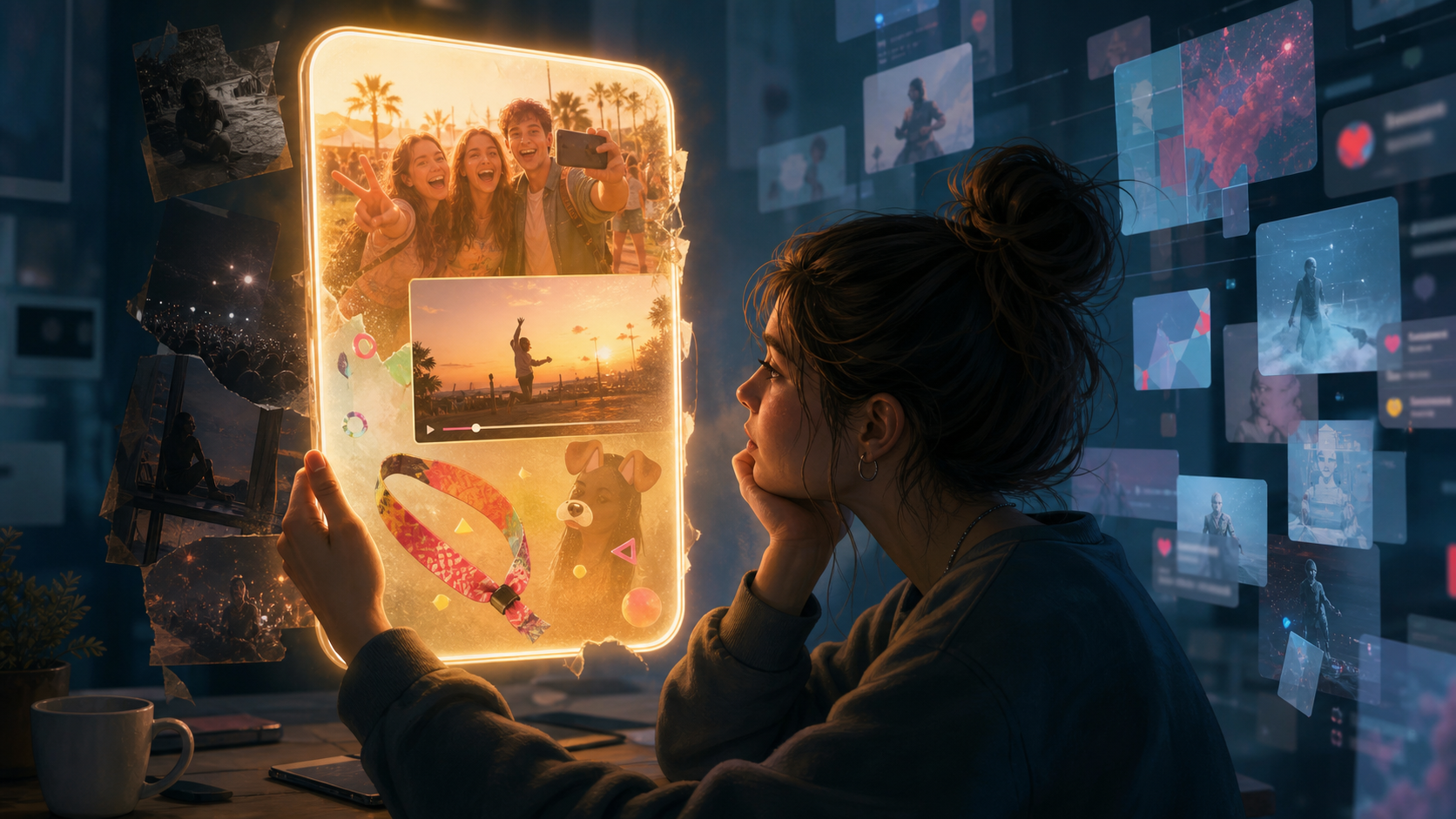
On TikTok, Instagram, X, and the platforms in between, people have been posting saturated throwbacks, old screenshots, dog-filter faces, songs that once seemed inescapable, Vine-era clips, and the loose declaration that “2026 is the new 2016.” The trend has acquired the kind of logic that only an online crowd can give a phrase: it is playful, contradictory, half-ironic, emotionally sincere, and everywhere at once.
Nobody literally believes a calendar can run backward. The clothes, music, filters, and old jokes are not the point by themselves. The phrase is doing something more ambitious. It is naming a desire for an earlier internet - one that felt smaller, stranger, less polished, less political, less synthetic, and somehow more human.
That desire is not foolish. It is also not a neutral historical record.
The return to 2016 is a useful case study in what happens when memory, platforms, and group identity begin working together. We are not simply remembering a year. We are collaboratively manufacturing an atmosphere from it, then holding the present against the version we manufactured.
That is where the Thinking Traps begin.
A Year Becomes a Mood
Ask ten people what they mean when they say they miss 2016 and you will get ten slightly different answers. Someone remembers an album released that year. Someone else remembers being younger, having fewer responsibilities, or seeing friends more often. Another person remembers Instagram before every post felt like a product, a résumé, a political statement, or a request to buy something. Others point to a version of the web before short-form feeds became the central nervous system of daily attention, before generative AI filled timelines with material that could be made endlessly and cheaply.
That is the power of collective nostalgia. An individual memory says, I miss who I was then. A collective memory says, we all remember when things were better. The second statement is more socially potent because it turns a feeling into a shared diagnosis of the present.
The internet is good at this. It can take a filter, a song, an old challenge, a familiar typeface, or an archive photo and make it feel like evidence of a lost civilization. It does not have to tell a complete story. It only has to produce enough recognizable fragments for millions of people to supply the rest.
2016 is especially usable because it sits at a sweet spot of digital memory. It is close enough to feel documented - many people have old photos, chats, songs, and posts from the period - but distant enough to feel softened. It is near history. Its rougher edges have had time to blur, while its visual language remains instantly available.
Rosy Retrospection: The Past Gets Better After It Is Over
Rosy retrospection is the tendency to remember the past as more pleasant than it felt while we were living it. It does not mean every happy memory is false. It means memory is not a neutral archive. We tend to preserve emotionally useful highlights, simplify the boring or difficult parts, and let a finished period feel more coherent than it ever did from the inside.
In 2016, people were not walking around saying they had reached the perfect internet. They complained about social media, celebrity culture, misinformation, election coverage, online harassment, image pressure, algorithm changes, and the endless small irritations of the apps they used every day. A great deal of what now reads as charming was irritating in real time. Some of the very memes being revived were once treated as evidence that the culture had become unbearable.
But memory does not preserve the past according to a fair editorial standard. It preserves what can still be used.
A grainy photo is no longer merely grainy. It becomes proof that images once felt less processed. An old looping video is no longer merely repetitive. It becomes proof that people once made things for fun rather than optimization. A half-remembered pop song becomes proof that culture used to be shared instead of scattered into personalized feeds.
There can be truth inside each of those feelings. Platforms really have changed. The incentives around content really have changed. Many people do experience the current feed as noisier, more commercial, more performative, or more flooded with material whose source and intent are difficult to read.
The trap is not noticing the difference. The trap is allowing the contrast to turn an entire year into a golden baseline that no living present could meet.
Rosy retrospection operates by comparison. The past does not need to have been good in every way. It only needs to look good next to the part of the present that currently exhausts us.
The Feed Is Not Just Recalling 2016. It Is Editing It
The phrase “2026 is the new 2016” sounds spontaneous, but the trend is also an editorial product of the same platform systems people say they are tired of. Algorithms reward recognizable material. A 2016 song arrives with built-in emotional metadata. A before-and-after selfie compresses a decade into one swipe. A familiar filter tells viewers how to feel before they have consciously decided to feel it.
Social media does not simply store memories. It ranks them, resurfaces them, gives them music, lets strangers react to them, and converts their circulation into a visible measure of collective approval. A personal throwback that receives thousands of likes is no longer only a memory of one afternoon. It becomes a tiny public referendum on what that afternoon meant.
Researchers who study digital memory sometimes describe this as a networked process: people, platform features, metrics, and archives all participate in deciding what becomes memorable. The person posting supplies a photograph. The platform supplies the prompt, format, and distribution. The audience supplies recognition. The combined result can feel less like an opinion than a fact everybody discovered together.
This is why the trend can make even people who did not enjoy 2016 feel strangely nostalgic for it. They are not always responding to their own memory. They are responding to a polished aggregate made from other people's best fragments.
The version of 2016 moving through the feed has no ordinary Tuesday. No abandoned group chat. No anxious scrolling at 2 a.m. No bad haircut that was not funny later. No event that was painful to someone whose experience does not fit the collective mood. The archive is not lying exactly. It is selecting.
Selection is powerful because it does not feel like an argument. It feels like taste.
Social Proof: If Everyone Misses It, Maybe It Really Was Better
Social proof is the tendency to use other people's behavior as evidence of what is valuable, normal, or true. In a crowded information environment, it is often useful. We cannot independently test every song, product, restaurant, or cultural claim. Seeing many people respond to something can be a reasonable signal that it matters.
But the signal becomes slippery when the thing being endorsed is an emotion.
Once a feed fills with declarations that 2016 was the last good year online, people begin encountering the idea before they have decided whether it matches their own experience. The repetition makes the feeling easier to access. Then the ease of access makes the feeling seem more widely shared. Soon, “I keep seeing this everywhere” becomes “everyone knows this was true.”
That is an availability cascade in miniature. A claim becomes familiar because it is repeated, then seems more credible because it is familiar, then gets repeated again because it now feels culturally obvious.
A million people posting a 2016 filter proves that the filter is circulating. It does not prove that 2016 was better, that the old internet was healthier, or that the current internet is beyond repair.
The social proof also has a gentler function. It gives people permission to say that the present is tiring. Nostalgia can be a coded form of criticism: I miss 2016 can mean I miss less pressure, more friendship, clearer culture, lower stakes, or an online life that did not seem designed to extract every second of my attention.
That is worth listening to. But a feeling becomes easier to understand when we translate it out of the meme.
What People May Actually Be Missing
The strongest version of this trend is not an argument that old filters were objectively superior. It is an argument about texture.
The older web often felt less professionalized. People posted poor-quality photos because they had a poor-quality photo, not because the imperfection had been designed into a brand identity. Viral videos could be silly without being a content strategy. A strange little corner of the internet could exist without immediately being turned into a growth opportunity, a political symbol, a product category, or a machine for producing more of itself.
Of course, the older web also excluded people, enabled cruelty, rewarded misinformation, and had its own brutal forms of comparison and performance. It was never a neutral playground. But the longing for its perceived looseness still tells us something important about the present.
People may be tired of feeling addressed by systems that know too much about how to keep them watching. They may miss encountering things that were not optimized for retention. They may want creative work that leaves fingerprints: signs of limited time, human taste, chance, awkwardness, and a person who cannot generate a thousand versions before lunch.
That is why the 2016 trend overlaps with the backlash against “AI slop,” even when participants do not use that phrase. The contrast is not simply human-made versus machine-made. It is often legible texture versus frictionless abundance. A slightly bad old photo can feel precious because its limits reveal a life around it. A perfect synthetic image can feel empty because it appears to have arrived without a life at all.
The risk is that we turn a valid hunger for texture into contempt for the current moment. Every era looks artificial from the wrong distance. The things people make now will eventually acquire patina too. A 2026 clip that feels disposable today may become, in ten years, evidence of how a particular group of people joked, dressed, loved, worried, and tried to stay connected.
The Past Is a Clue, Not a Place to Live
Nostalgia can be psychologically useful. It can reconnect us with continuity, relationships, and parts of ourselves that got lost under newer obligations. A song from adolescence can remind a person that they have survived earlier versions of uncertainty. A shared throwback can restore a little warmth between people who no longer see each other often.
The problem begins when nostalgia stops being a resource and becomes a verdict. If the present is only measured against a selected past, then the present is always going to lose. It has not had time to be edited yet. Its unfinished stories are still loud. Its bad news has not become a footnote. Its ordinary joys have not been sorted into a highlight reel.
A more honest use of nostalgia asks what the memory is pointing toward. If you miss 2016 because your friendships felt more spontaneous, the useful response may be to make a plan that is not mediated by a feed. If you miss an internet that felt more playful, make something that does not need to perform. If you miss content that seemed human, support creators and communities where human effort remains visible.
That is different from trying to recreate a year. It is using the year as a clue about a need.
The internet can keep declaring that 2026 is the new 2016. It is a good caption because it makes a complicated longing feel simple, shareable, and communal.
But the better question is not whether we can get the old internet back.
It is what, exactly, we learned to miss - and whether we are willing to build some of it now.
Sources and Context
- Associated Press: As an uncertain 2026 begins, virtual journeys back to 2016 become a trend
- Fast Company: What the '2026 is the new 2016' trend means
- Forbes: TikTok's '2026 Is The New 2016' trend explained
- New Media & Society: Quantified Nostalgia - Social Media, Metrics, and Memory
- Current Opinion in Psychology: Collective memory and social media
Check question: What am I genuinely missing about that era, and what am I adding because a curated memory feels easier to live inside than the present?