Politics, Public Health, and Judgment
The Covid Accountability Gap

The Fauci hearing reignited a question Covid never resolved: when a vast institutional failure changes millions of lives, why do we search for one person who can carry the whole moral weight?
The Anthony Fauci hearing arrived carrying a question far larger than any one witness could answer: after a pandemic that changed nearly every American life, who is supposed to account for what happened?
The hearing gave that question a new face. Clips centered on Fauci, the former director of the National Institute of Allergy and Infectious Diseases, as senators pressed him on the pandemic's origins, changing guidance, government records, and the decisions surrounding Covid. His repeated invocation of the Fifth Amendment became the viral detail. But it is not the whole story, or even the most revealing one.
The deeper story is the Covid accountability gap.
Millions of people lost someone. Others lost jobs, years of school, trust in public health, savings, businesses, relationships, or the ordinary confidence that institutions knew what they were doing. Guidance changed. Officials disagreed. Some decisions look different in hindsight. Some questions remain unresolved. Many people feel that the scale of the disruption has never been met by an equally serious public reckoning.
That feeling is real. It deserves more than a sneer or a fact-check label.
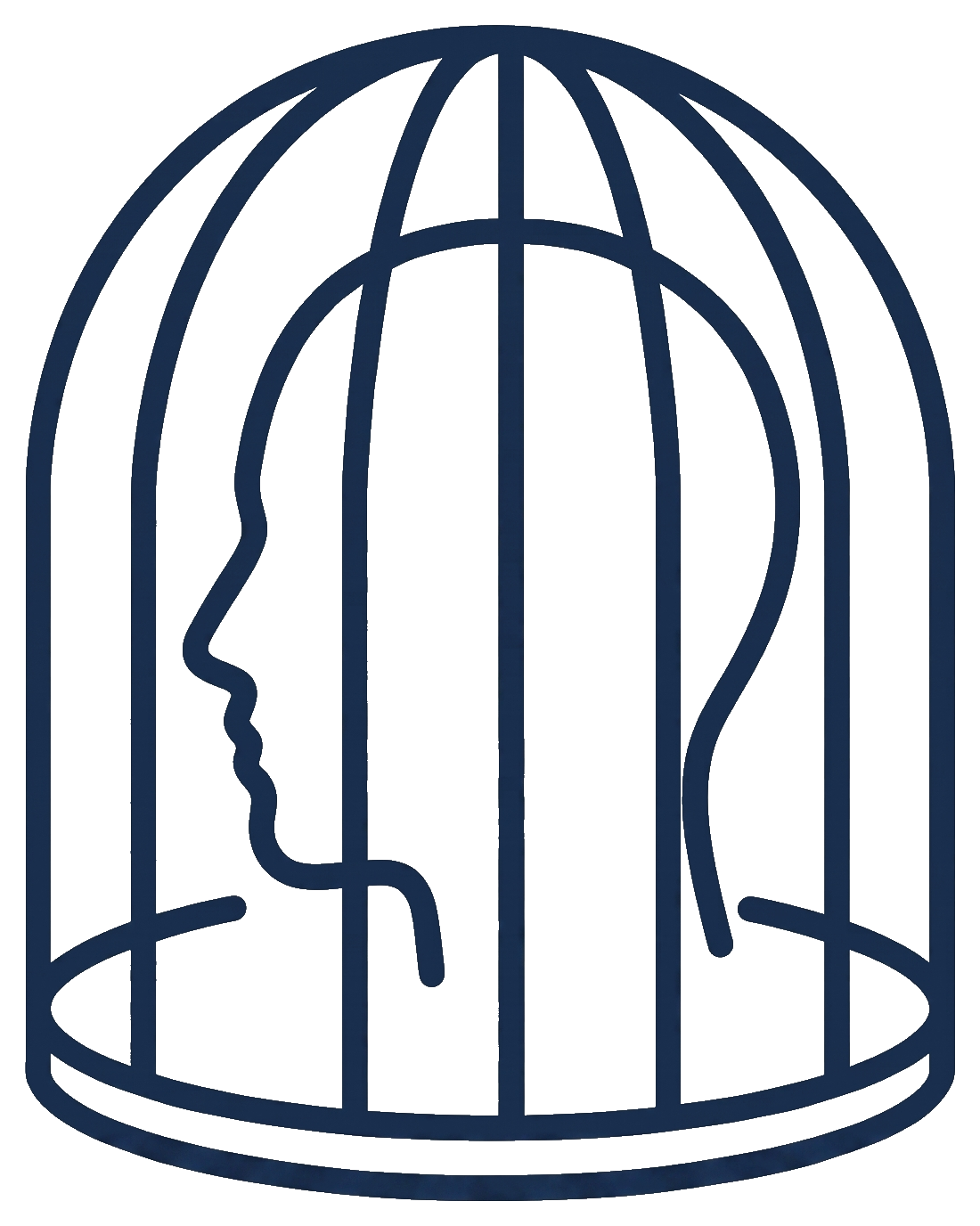
But it also creates a powerful thinking trap: when a vast system fails people, we go looking for one person large enough to hold the entire moral weight of the era.
The Need for Someone to Answer For It
Accountability is not the same as blame. Accountability asks who made which decision, what information they had, what tradeoffs they accepted, what went wrong, and what should change. Blame has a simpler assignment: find the person who represents the pain, then make that person explain all of it.
Covid made that distinction unusually hard to hold. The pandemic was not one event with one author. It involved a novel virus, scientific uncertainty, hospitals, governors, school systems, federal agencies, media organizations, employers, pharmaceutical companies, families, and millions of ordinary decisions. No single person controlled the whole machine. Yet no one wants to hear that a life-altering crisis was also structurally complicated.
Complexity can sound like evasion when someone is grieving or angry. It can feel insulting to say that there is no single villain equal to the harm. The mind therefore reaches for a cleaner narrative: one official knew, one agency lied, one adviser gave the bad advice, one hearing will finally expose the truth.
That narrative has emotional advantages. It transforms a sprawling tragedy into a story with a protagonist, an antagonist, and a final reckoning. It gives pain an address.
The problem is not that individuals should escape scrutiny. Public officials should be asked hard questions. The problem begins when one visible person becomes a stand-in for every institution, every policy, every shifting fact, and every private loss connected to the pandemic.
Scapegoating Makes a System Feel Legible
Scapegoating is not merely irrational name-calling. It is a human response to diffuse harm. When a problem is too large, too complicated, or too painful to explain, concentrating anger on a symbolic target can make the world feel intelligible again.
Fauci is an especially potent target because he was visible at a moment when visibility itself felt like power. Daily briefings placed him in American homes. He became associated with masks, vaccines, restrictions, uncertainty, and official reassurance. To his critics, he can represent a distant expert class that made life-changing recommendations without paying the same costs. To his defenders, he can represent science under political attack.
Notice what happens in both versions. The person becomes a symbol before he becomes a full subject of inquiry.
Symbols are useful because they compress a vast story into one recognizable image. But compression has a cost. It erases the differences among a federal adviser, a governor, a school board, a hospital administrator, a newsroom, a local employer, and a virus that repeatedly changed the available choices. It also lets everyone else who shared responsibility slide out of focus.
A hearing can magnify this effect. It puts a single person under lights and turns a many-layered question into a series of confrontations. That is good television. It is not automatically good diagnosis.
The Hearing-Clip Trap
The Senate hearing was a real political event with real stakes. But most people did not experience it as a complete record. They experienced it as fragments: a clipped question, a raised voice, a refusal to answer, a caption, a repost, and then an argument about what the clip obviously proved.
This is the availability heuristic at work. The information that is vivid, repeated, and emotionally charged feels more important and more representative than information that is slower to absorb. A five-second exchange can come to stand for years of institutional history because it is easier to picture.
The same mechanics reward outrage. A post that says, 'This is what they have been hiding,' travels farther than a post asking which agency controlled a particular decision, what evidence was available at the time, or which claim is actually established by the record.
That does not make the anger fake. It means the feed is optimized for the emotional climax, not for the slow work of sorting questions. The most shareable moment is rarely the one best suited to distribute responsibility accurately.
A practical reset is to ask: What does this clip establish on its own? Then ask: What larger conclusion am I attaching because the clip fits a story I already carry?
Hindsight Bias: The Past Looks More Certain Than It Felt
Hindsight bias is the tendency to see an outcome as having been obvious after we know how it unfolded. It is one of the reasons pandemic judgment is so combustible. With years of data behind us, people can revisit early warnings, policies, closures, vaccine debates, origin questions, and public statements with a confidence that was not available in real time.
Sometimes hindsight reveals genuine mistakes. It should. Institutions need to learn in public, especially after errors that affected millions of people. But hindsight also makes every uncertainty look like a concealed certainty. We can forget what was unknown, what changed, and how many decisions were made under conflicting evidence and pressure.
The trap has two equal and opposite forms. One says, 'They could not have known everything, so no one should be held responsible.' The other says, 'I can now see what they should have done, so they must have known it then.' Neither is adequate.
A fairer question is harder: given what was reasonably knowable at that moment, what did officials choose, what did they communicate, and where did they fail to revise course when new evidence arrived? That question does not absolve anyone. It simply asks accountability to remain tied to time, evidence, and actual authority.
Distrust Is Not a Theory of Everything
Public trust in government was already fragile before Covid and remains fragile now. In that environment, contradictions can feel like proof of conspiracy, and official caution can sound like a cover-up. Institutions do not earn trust by requesting it. They earn it through transparency, humility, correction, and a willingness to acknowledge harm without hiding behind procedure.
Yet distrust can become its own filter. Once a person decides every institution is fundamentally deceptive, every missing answer looks intentional and every complicated explanation sounds coordinated. The absence of a satisfying account becomes evidence that a secret account must exist.
This is where conspiracy thinking and proportionality bias can meet. We assume an event this consequential must have an equally intentional cause. A pandemic that altered the world feels too large to arise from error, uncertainty, competing incentives, or ordinary institutional failure. Surely someone must have designed the outcome, controlled the story, or known the full truth.
Sometimes institutions do conceal things. Sometimes officials protect reputations instead of the public. Suspicion is not automatically irrational. The thinking trap appears when suspicion no longer has a standard of evidence that could ever be met. Every answer becomes proof of deception; every lack of evidence becomes proof it was hidden.
What Real Accountability Would Demand
The most serious form of accountability is less cinematic than a viral hearing. It asks for records, timelines, clearly scoped investigations, transparent corrections, and decisions tied to named authorities. It separates what is known from what is alleged. It can say that an official made a serious mistake without claiming that person caused every consequence of the pandemic.
It also distributes attention where it belongs. Federal public-health advice mattered. So did state policy, local implementation, hospital capacity, private incentives, media incentives, and the behavior of every institution that translated uncertain science into rules for ordinary people. A national reckoning that looks only for a single face will miss the system that made the failures possible.
The Fauci hearing may produce more evidence, legal disputes, or political theater. It may do all three. The responsible response is neither automatic exoneration nor automatic condemnation. It is refusing to let the understandable hunger for an answer turn one person into a substitute for the answer itself.
Covid is not finished simply because the emergency phase ended. The losses, mistrust, and unanswered questions remain. So does the temptation to make one familiar figure carry them all.
Before we decide who is guilty of an entire era, we should ask a more demanding question: Which specific decision am I judging, who actually had authority over it, what was known at the time, and what evidence would change my mind?
Sources and Context
- U.S. Senate Homeland Security and Governmental Affairs Committee: Testimony of Anthony Fauci
- Associated Press: Fauci invokes the Fifth Amendment more than 100 times at Senate hearing
- STAT: What to expect from Fauci's Senate testimony
- KFF: The U.S. Covid-19 pandemic in review
- Pew Research Center: Public trust in government
Check question: Am I asking for real accountability, or asking one person to carry a system, a tragedy, and an era because that story is easier to hold?