Everyday Risk and Attention
When Wildfire Smoke Feels Like 'Not a Big Deal'
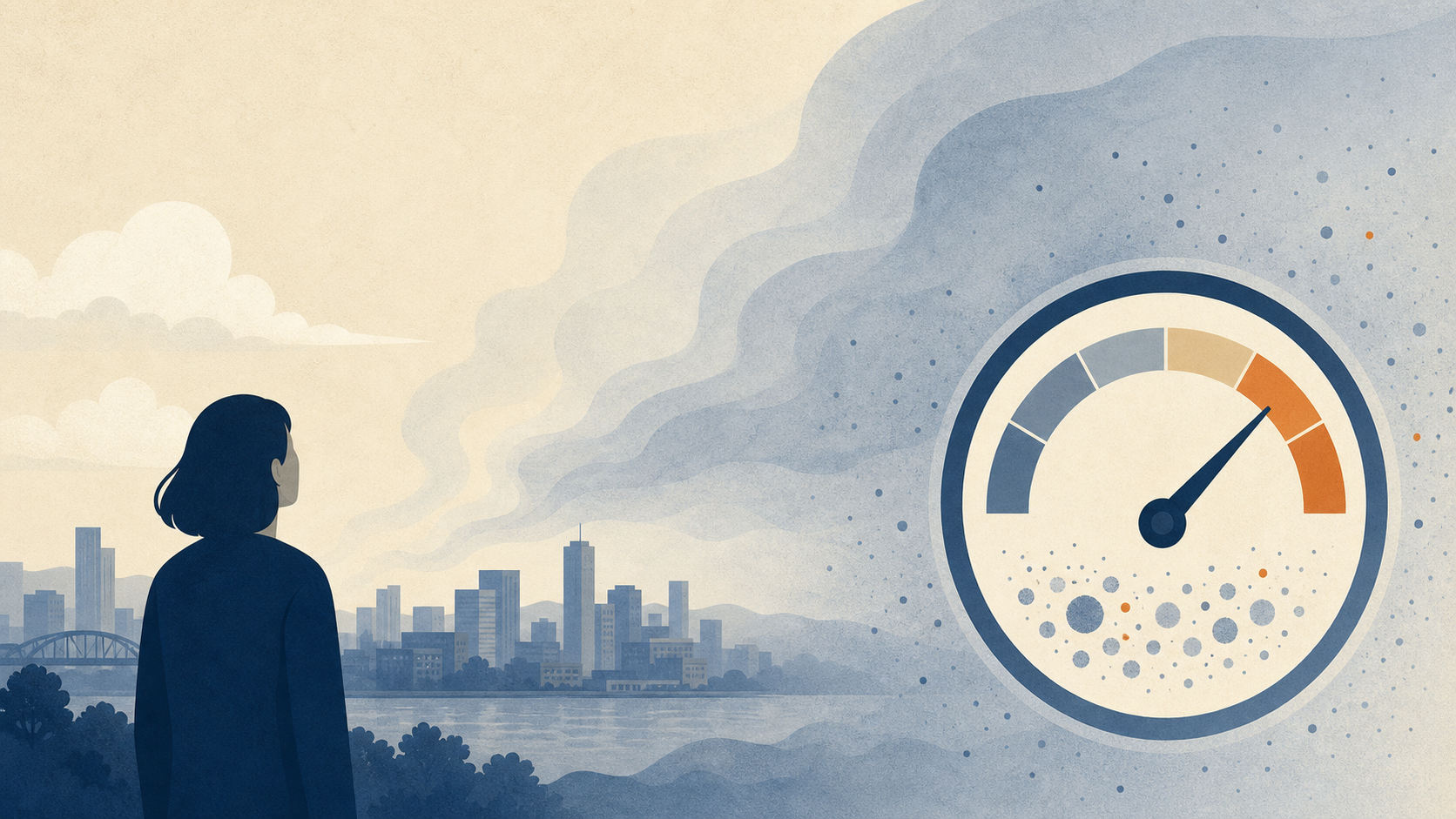
Canadian wildfire smoke now affecting parts of the Midwest and Northeast shows how visibility, familiarity, and personal experience can distort our read on a risk that is not always easy to see.
Wildfire smoke from Canada is pushing air-quality alerts across parts of the Midwest and Northeast this week. For many people, the signal is obvious: a yellow sky, a campfire smell, a distant-looking haze. For others, the day can seem almost normal. That mismatch is a useful reminder that our first read on a risk is often built from what feels familiar, visible, and close at hand.
The point is not to turn every smoky day into a catastrophe. Public-health guidance exists for a reason, and local conditions vary. The thinking-trap part is what happens between the first impression and the next decision: do we dismiss a warning because there is no fire nearby, overreact because the sky looks dramatic, or assume that our own experience is the complete measurement?
The first trap is normalcy bias. When an environment still looks mostly familiar - the commute is running, the store is open, the fire is hundreds of miles away - the mind can assume the warning is not really about us. But smoke can travel long distances, and the EPA notes that fine particulate pollution is the major health concern in wildfire smoke. A risk does not have to arrive with flames at the door to be real.
The second trap is the availability heuristic. What is easy to notice gets a loud vote. A strong smell, an orange sunset, or a viral skyline photo can make a risk feel larger and more immediate. On the other hand, a clear-looking block or a day without obvious symptoms can make it feel smaller. Neither impression is useless, but neither is a complete substitute for the local information designed to measure air quality.
The third trap is optimism bias. It can sound like: I am healthy, I will be fine, it is only a short walk, the air will clear before I need to change plans. Sometimes that will be true. The bias appears when a hopeful guess quietly becomes the only plan, especially when the effects and the exposure are not distributed equally across children, older adults, people with heart or lung conditions, and outdoor workers.
This is also why online conversation can be confusing during a smoke event. One person posts a dramatic photo; another replies that they went outside and felt fine; someone else shares a map with a frightening number. Each post can be a real piece of the story without being the whole story. A feed rewards the most vivid evidence. Good judgment needs the context around it.
The practical move is simple: treat the visible sky as a prompt to check better information, not as the final answer. That creates room between what the day feels like and what the conditions may actually call for. It is a small habit, but it is the same habit that helps with financial headlines, relationship conflicts, and online claims: notice the first story, then look for the measurement.
When the next alert feels easy to ignore or impossible to interpret, ask: am I judging this from how normal it feels, or from the information meant to measure it?
Sources and Context
Check question: Am I judging this from how normal it feels, or from the information meant to measure it?